Art • Politics • Access
To the Industry Insiders!
How the Venice Biennale turned the scandal around Russia and Israel into a closed viewing for its own people
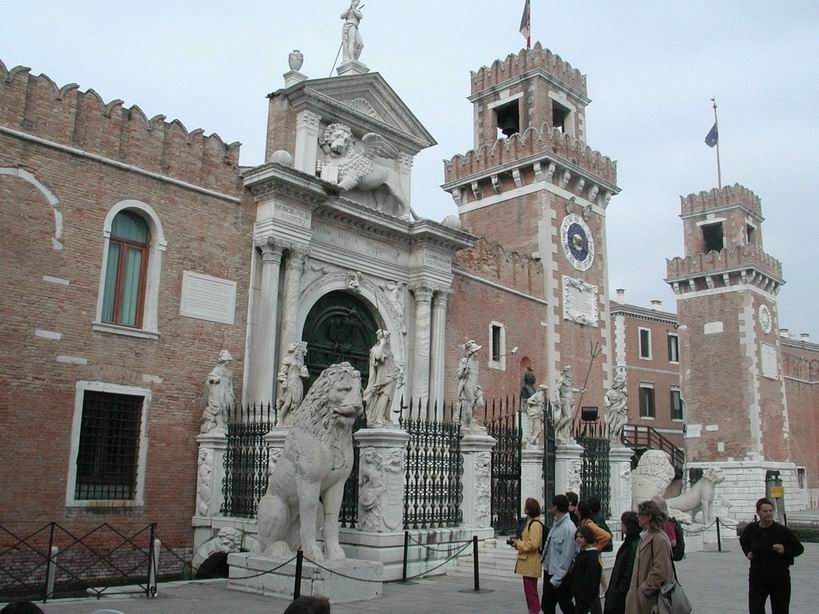
Venice, 2026. A public exhibition discovers a strangely private format: a national pavilion that officially participates, yet is effectively experienced in full by the press, art professionals and a new ritual class of “industry insiders.”
The story runs through Russia’s return, Israel’s parallel political shadow, the International Criminal Court, the resignation of the jury, the Visitors’ Lions and the absurd transformation of access control into the season’s central artwork.
The public exhibition ends up divided between those who enter and those left with the afterimage.
The Main Toast of the Season
If the 2026 Venice Art Biennale, opening to the general public in the coming days, had an official toast, it would be very simple: “To the industry insiders!”
Exactly like that - with an exclamation mark, almost in the tone of a dark national comedy: to those who will get inside while the ordinary viewer remains outside; to those who will see the live action while the public receives a screen; to those who may later explain to everyone else that they did not quite understand the exhibition they were not allowed to see.
The story surrounding the Russian pavilion, and the wider scandal involving Russian and Israeli participation, is funny not because there is no reason for sadness. The political landscape of international court warrants, cultural boycotts, the right of an artist not to answer for a state, and the right of an institution not to become a shop window for a state - all of this is deeply serious.
What is funny is the form into which the current Biennale has managed to package it all. From February to May, the institution tried to slip between the drops, attempting to pass through every diplomatic, legal, moral and bureaucratic loophole, only to arrive at a spectacular finale: the resignation of the entire international jury.
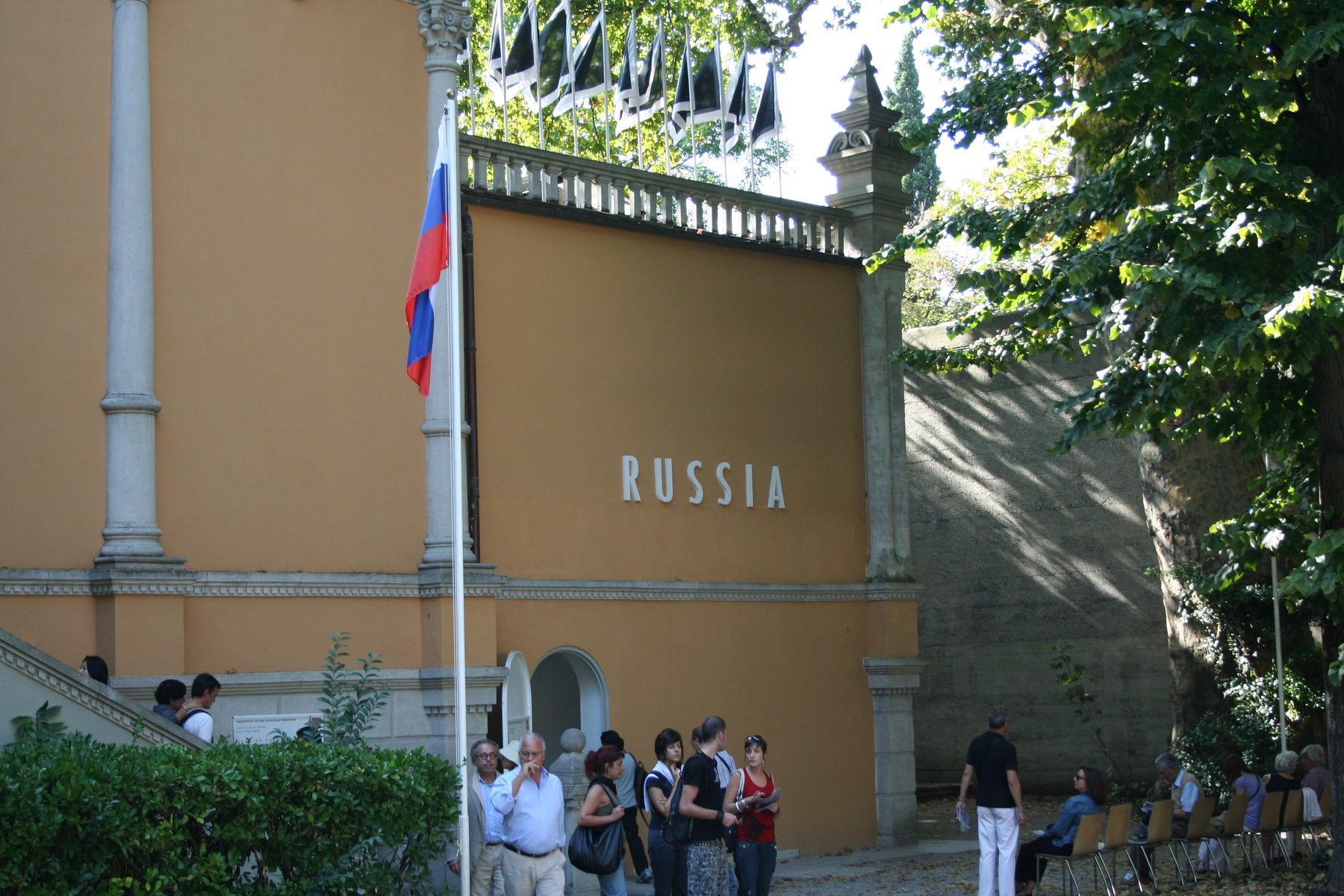
In 2026, the old, almost imperial model of national pavilions produced a rare result. One of the most discussed pavilions of the exhibition - the Russian one - was reported by the art press to be open only during the professional preview period: for the press, art professionals and those mysterious “industry insiders.” After that: a closed door and a broadcast or documentation visible from outside.
Either do not show it at all, or show it to everyone - that would be normal human logic. Venice chose a third way: show it to the chosen few, and even then only for a couple of days, leaving the rest with the trace of an event.
Who Are the “Industry Insiders”?
The phrase “industry insiders” deserves a pavilion of its own. Who are they? Not the public. Not necessarily critics. Not necessarily curators. Not necessarily museum directors. Not necessarily collectors.
They are some new estate of contemporary art: people to whom one may show what cannot be shown to the public, because they are apparently sufficiently industry-based not to disturb the fragile balance of sanctions, diplomacy, press releases and the bad mood of European officials.
Old Venice had patricians, merchants and ambassadors. New Venice has industry insiders. They are not merely viewers. They are viewers with internal access.
The ordinary public buys a ticket, enters the Arsenale and the Giardini, passes through a tracking system and is then expected to vote for the Visitors’ Lions. The insiders enter a space that the ordinary visitor will later see only as an unreachable object: a pavilion where art has already happened, but not for them.
That is why the formula is so funny. Not because press previews at biennials are rare. They are standard practice. The absurdity lies elsewhere: when the actual content of a pavilion is effectively reduced to a preview viewing, and then replaced by documentation for everyone else.
The preview ceases to be a preparatory stage before a public exhibition. It becomes the main event. The public arrives only after the “real people” have already seen everything.
The Unfunny Part
On March 4, 2026, La Biennale di Venezia published the list of national participations for the 61st International Art Exhibition, In Minor Keys. The list included 100 national participations and 31 collateral events.
Russia was listed in the Giardini with the project The Tree Is Rooted in the Sky. The commissioner was Anastasiia Karneeva. The list of participants included Antonio Buonuario, DJ Diaki, Marco Dinelli, Timofey Dudarenko, Tatiana Khalbaeva, Alexey Retinsky, Intrada Ensemble, Toloka Ensemble, Phurpa and others.
Israel was listed in the Arsenale with the project Rose of Nothingness. The commissioner was Michael Gov, and the artist was Belu-Simion Fainaru.
Russia’s return was itself a political event. After the full-scale invasion of Ukraine, Russia did not present a full exhibition at the 2022 and 2024 art biennials. Its last full participation in the Venice Art Biennale before the current crisis dated back to 2019. In 2024, the Russian pavilion was handed over to Bolivia.
Therefore, Russia’s return in 2026 could not be perceived as an ordinary administrative line in a list of countries.
ArtReview later reported that published correspondence pointed to a special regime for the Russian pavilion: access only during the preview days, when art professionals and the press enter the Giardini and their passes are issued free of charge. During those days, Russia was expected to present a series of performances, which would then be streamed on a screen visible from outside the pavilion for the rest of the exhibition.
Surface formulated it even more simply: the Russian pavilion would be closed to the general public for almost the entire exhibition period, from May 9 to November 22, with access limited to a short preview for the press and invited guests.
In effect, this produces a Schroedinger pavilion. It participates and does not participate. It is open and closed. It is shown and not shown. It is present in the official list, but absent for the ordinary viewer as a full exhibition experience.
If an artist had invented such an installation about cultural diplomacy, it might have been brilliant. But when the institution itself acts this way, it is no longer an installation. It is an emergency manual.
The Israeli Line: A Second Pavilion in the Same Political Knot
Here precision matters. The “press and insiders only” regime described in public reports refers primarily to the Russian pavilion. But the 2026 scandal was not built around Russia alone.
Israel became linked to Russia through the decision of the international jury not to consider for awards the national participations of countries whose leaders are subject to charges or warrants from the International Criminal Court. Reuters, The Guardian and AP wrote that, in practice, the decision concerned Russia and Israel.
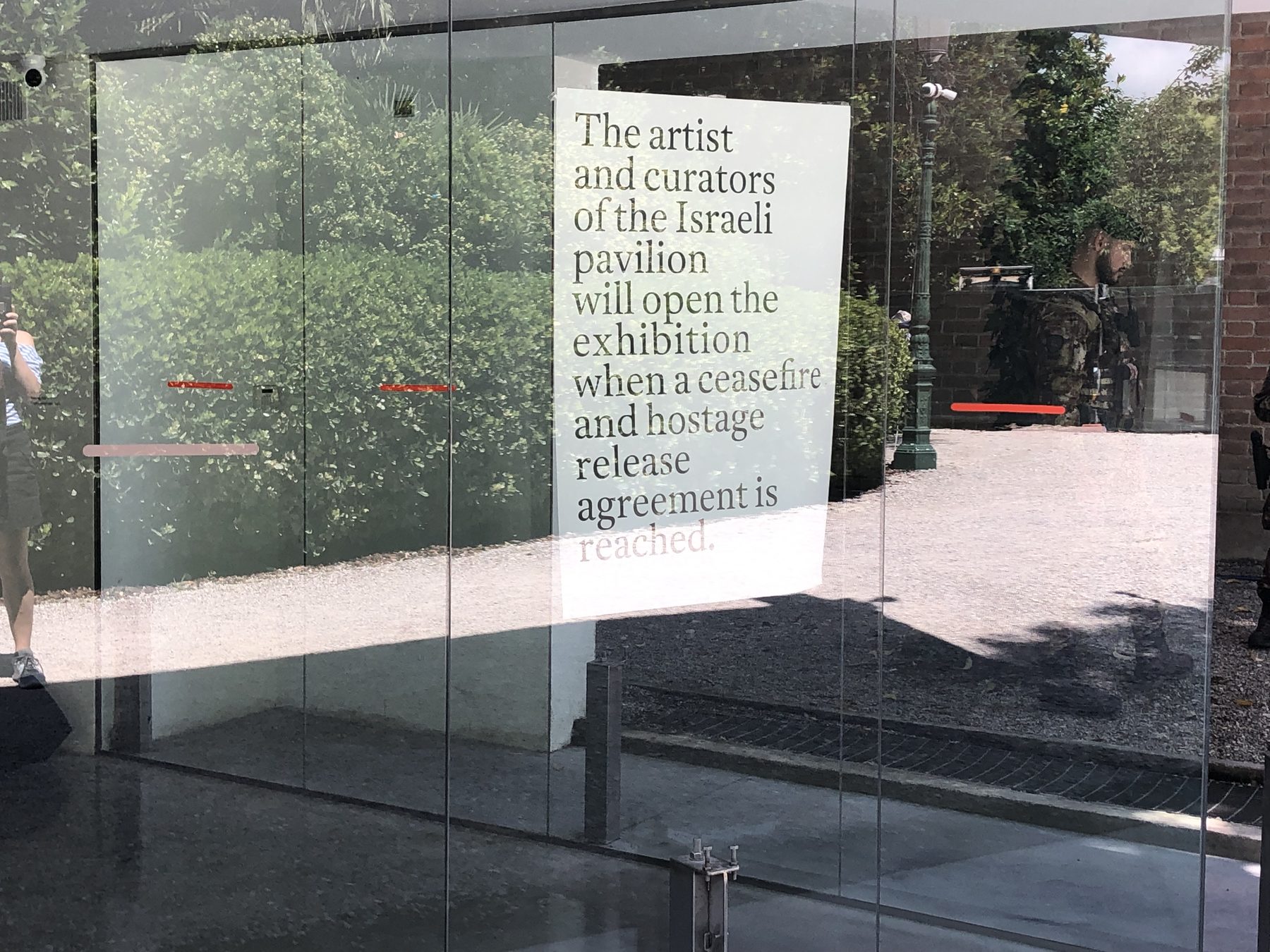
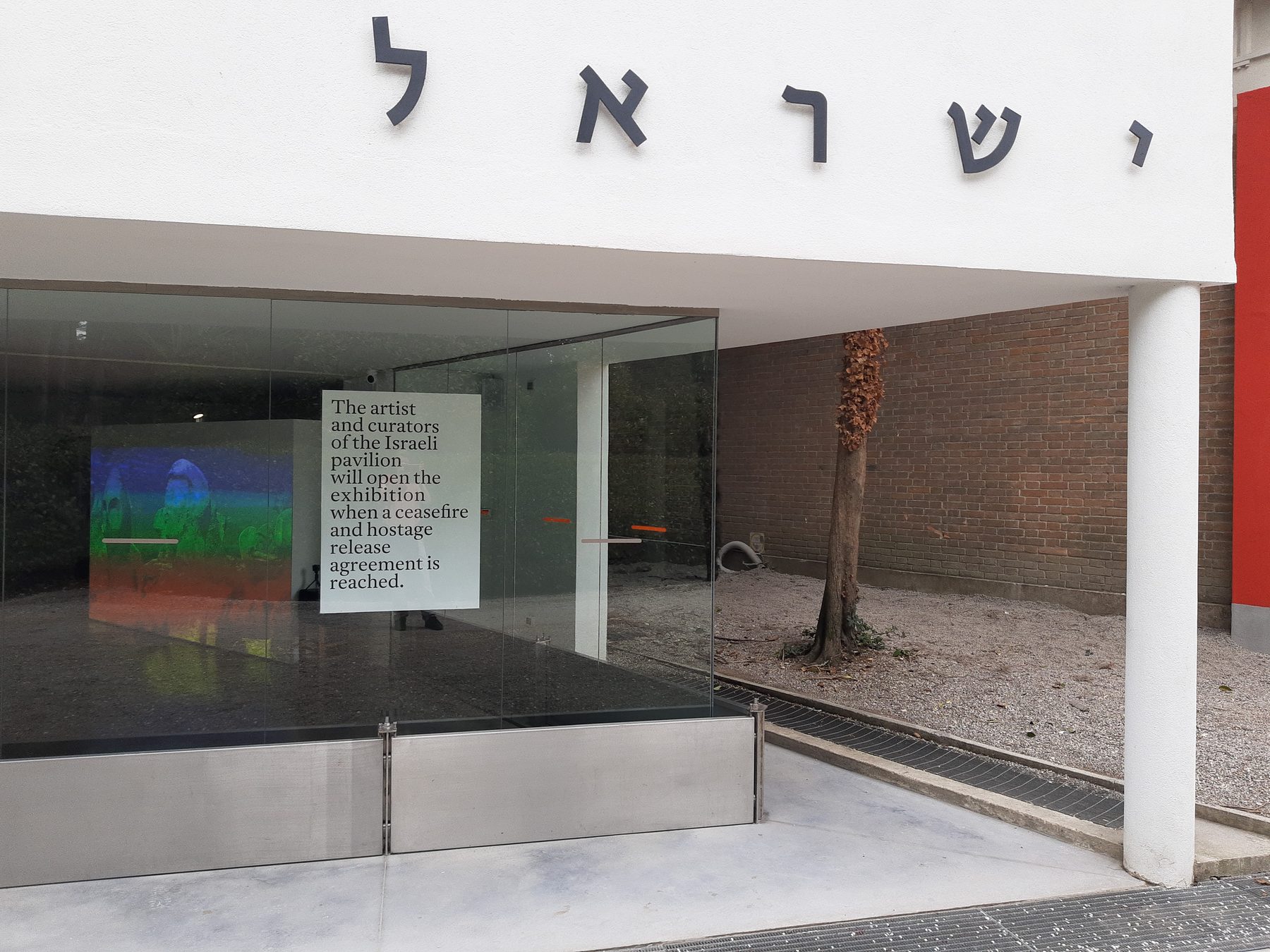
The parallel is strengthened by the previous Venice Biennale. In 2024, the Israeli pavilion did not open to the public by decision of the project’s own participants: artist Ruth Patir and curators Mira Lapidot and Tamar Margalit. They stated that the exhibition would not open until there was a ceasefire in Gaza and an agreement to release hostages.
AP quoted the statement displayed in connection with the decision: “The art can wait, but the women, children and people living through hell cannot.” It was a political gesture made by the authors of the pavilion themselves.
In 2026, a strange rhyme appears. The Israeli pavilion of 2024 was closed as an artistic and political refusal to open before a humanitarian condition was met. The Russian pavilion of 2026, according to press reports, becomes almost closed to the public through the logic of sanctions, access and institutional compromise.
In the first case, the closed door was a statement. In the second, it is a bureaucratic construction. But in both cases, the pavilion door itself became the main political object.
The Kabakovs Will Appear in Venice’s Pavilion
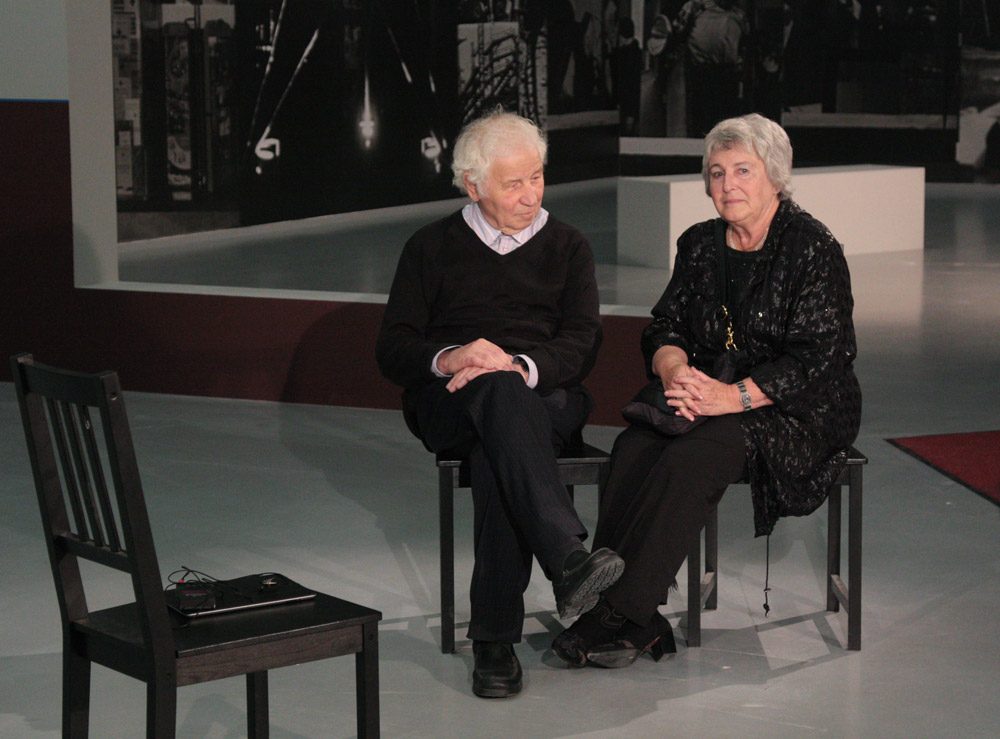
At the same time, artists of Russian origin will still be visible in the program of the 61st Venice Biennale. Emilia Kabakov will present Venetian Diary, a project conceived together with Ilya Kabakov before his death.
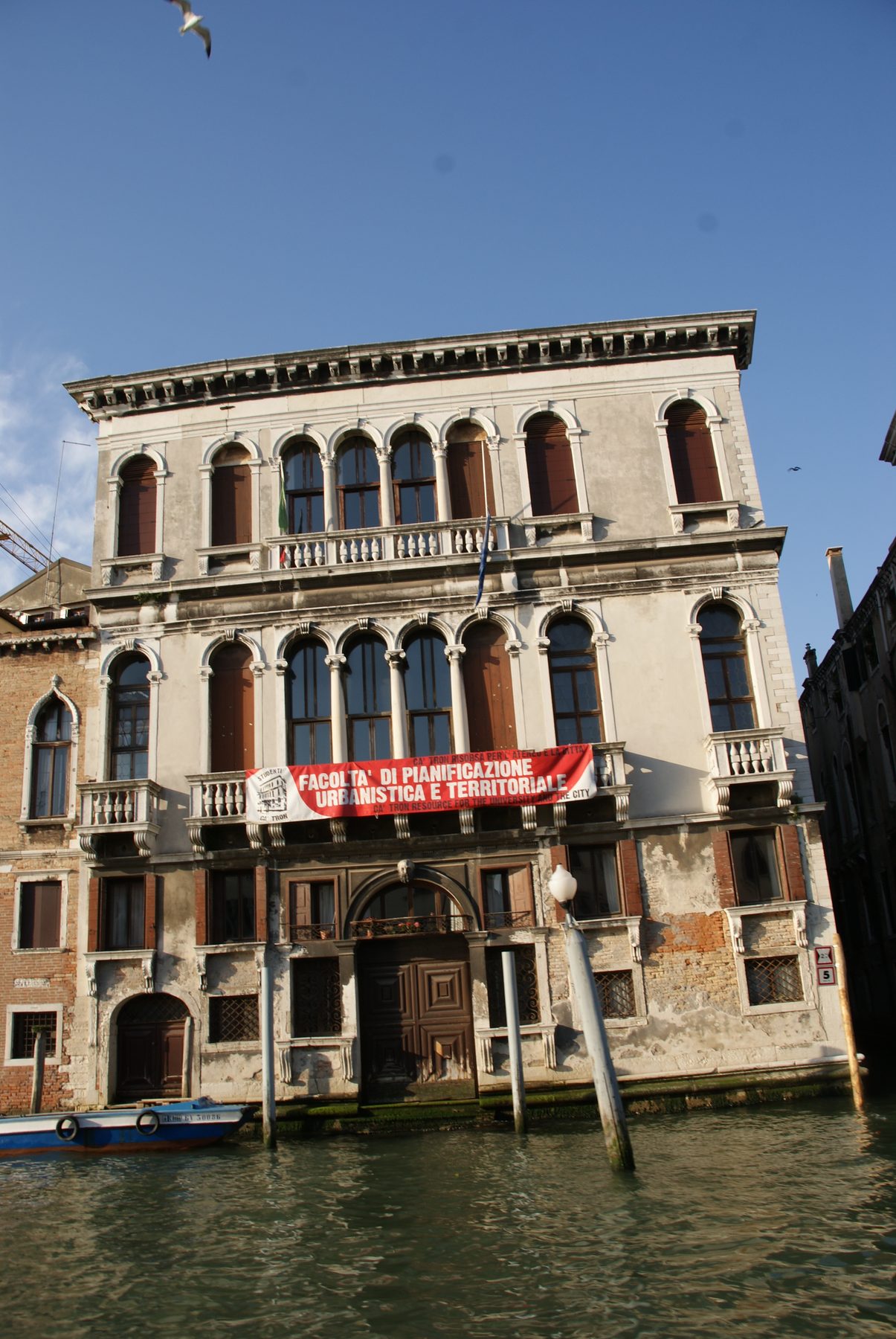
Around 550 residents of Venice are taking part in the project. Each wrote a diary page about their connection to the city and contributed a personal object. These texts and objects will be displayed in museum vitrines at Palazzo Ca’ Tron and in the Venice Pavilion in the Giardini.
The exhibition is scheduled to run from May 9 to June 28, 2026.
The Jury: Five Names, One Gesture and a Weak Procedure
On April 22, 2026, La Biennale announced the international jury of the 61st exhibition. Its president was Solange Oliveira Farkas, founder of Associação Cultural Videobrasil.
The jury also included Zoe Butt, curator and founder of the in-tangible institute; Elvira Dyangani Ose, artistic director of the Public Art Abu Dhabi Biennial and former director of MACBA; Marta Kuzma, professor at Yale School of Art and a figure associated with Documenta 13 and Manifesta 5; and Giovanna Zapperi, professor at the University of Geneva.
These were not five random people. This was a professional, international and highly experienced team.
Under the rules, this jury was supposed to award the main prizes: the Golden Lion for best national participation, the Golden Lion for the best participant in the main exhibition, and the Silver Lion for a promising young participant. The award ceremony was scheduled for May 9, 2026, the opening day of the exhibition.
But already on April 23-24, the press reported that the jury would not consider participants from two countries for awards. The countries were not named directly, but everyone understood which two were meant.
The jury’s reasoning referred to the protection of human rights. The Guardian reported that the position was linked to the vision of the late curator Koyo Kouoh. The moral impulse is understandable. The procedure is not.
The problem is that the International Criminal Court issues warrants for specific individuals, not for pavilions. A national pavilion is indeed a form of state representation, but an artist is not the head of state.
If a pavilion is admitted to participate but is excluded from awards in advance, a strange semi-form is created: the country may be present, but it cannot win; the artist may exhibit, but the result is blocked beforehand; the Biennale preserves the principle of openness, while the jury introduces a moral filter inside the competition.
It is a boycott and not a boycott. A sanction and not a sanction. But it is clearly censorship. It is an intermediate construction: ethically conscious and understandable, but legally and institutionally loose. That is why it did not hold.
The Press: “Fresh Turmoil,” EUR 2 Million and Officials at the Door
Reuters called the situation “fresh turmoil” and reported that the entire jury had resigned after a dispute over Russia and Israel. AP emphasized that the resignation happened just nine days before the opening, and that the Biennale confirmed the jury’s departure without giving a detailed explanation.
The Guardian wrote about a row over Russia and linked the crisis to pressure from Ukrainian representatives, European officials and Italian politics.
AP also reported an important financial and political detail: the European Commission had threatened or reduced Biennale funding by EUR 2 million because of Russia’s return. The Italian Ministry of Culture sent officials to collect documents about the procedure by which the Russian pavilion had been admitted.
Italy’s culture minister, Alessandro Giuli, reportedly said that he would not attend the preview or the opening because of Russia’s participation. At the same time, the Biennale leadership, headed by Pietrangelo Buttafuoco, insisted on the institution’s autonomy and on the rule that any country recognized by Italy may participate.
This is how art turns into a full administrative opera. The jury appeals to the ICC. The European Commission appeals to a grant. The ministry appeals to documents. The Biennale appeals to autonomy. Russia appeals to the right of a historic pavilion. Israel appeals to accusations of discrimination. The public appeals to its ticket. The insiders appeal to their access pass.
Everyone speaks a different language, but everyone stands around the same door.
The Resignation and the Visitors’ Lions: Giving the Decision to Those Who Cannot See Everything
On April 30, La Biennale issued a dry official statement: the resignations of the international jury had been received. The statement listed Solange Farkas, Zoe Butt, Elvira Dyangani Ose, Marta Kuzma and Giovanna Zapperi.
That was all. No tragic rhetoric. No grand explanation. Only a bureaucratic fact. The body that was supposed to award the main artistic prizes disappeared just days before the opening.
Almost simultaneously, the Biennale announced a new decision: two Visitors’ Lions would be established. One would go to the best participant in the main exhibition, the other to the best national participation.
The award ceremony was moved from May 9 to November 22, 2026. Voting would be open to ticket holders who had visited both exhibition venues, with attendance verified through the ticketing system’s tracking.
All national participations from the official list were once again included in this new form of award.
Here the bureaucratic comedy reaches absolute purity. The jury did not want to reward Russia and Israel. The jury resigned. The Biennale kept everyone in the list. The awards were handed over to visitors.
But the Russian pavilion, according to press reports, will hardly be seen from inside by the ordinary visitor. So a viewer may vote for the best national pavilion, while one of the most controversial objects of the season is offered to them through external documentation of something others saw inside.
It is as if a restaurant asked you to judge a dish tasted only by sommeliers, critics and gastronomy-industry insiders, while showing you a photograph of the plate. And then said: please vote, we have democratized the process.
The History of Venice: From 224,000 Visitors to a Screen Outside a Closed Pavilion
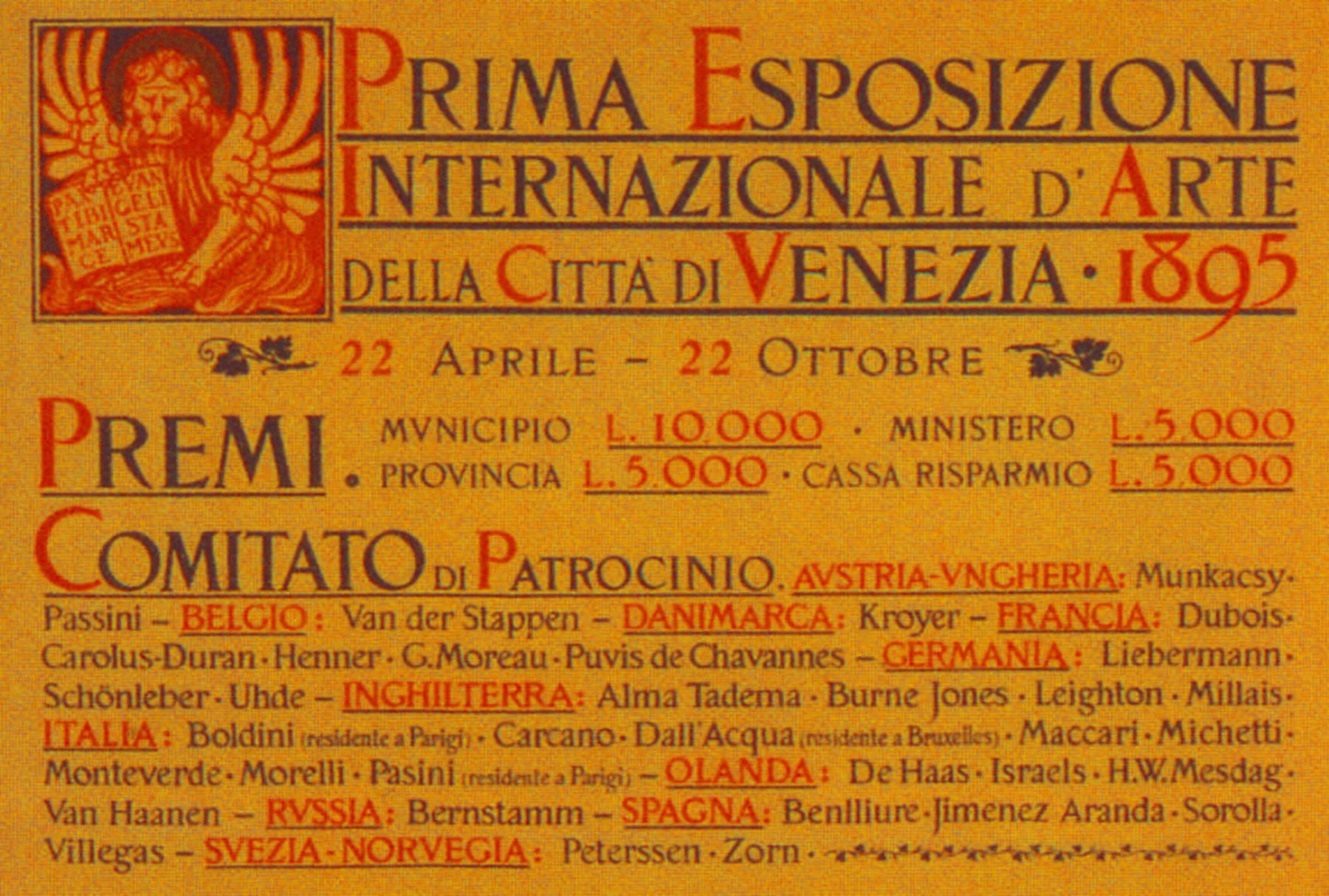
The contrast with the history of the Venice Biennale is almost cruel. The first International Art Exhibition of the City of Venice opened on April 30, 1895 and, according to the Biennale’s official history, attracted 224,000 visitors.
The national pavilions appeared later. The Belgian pavilion was the first in 1907. It was followed by the Hungarian, German and British pavilions in 1909, the French pavilion in 1912, and the Russian pavilion in 1914.
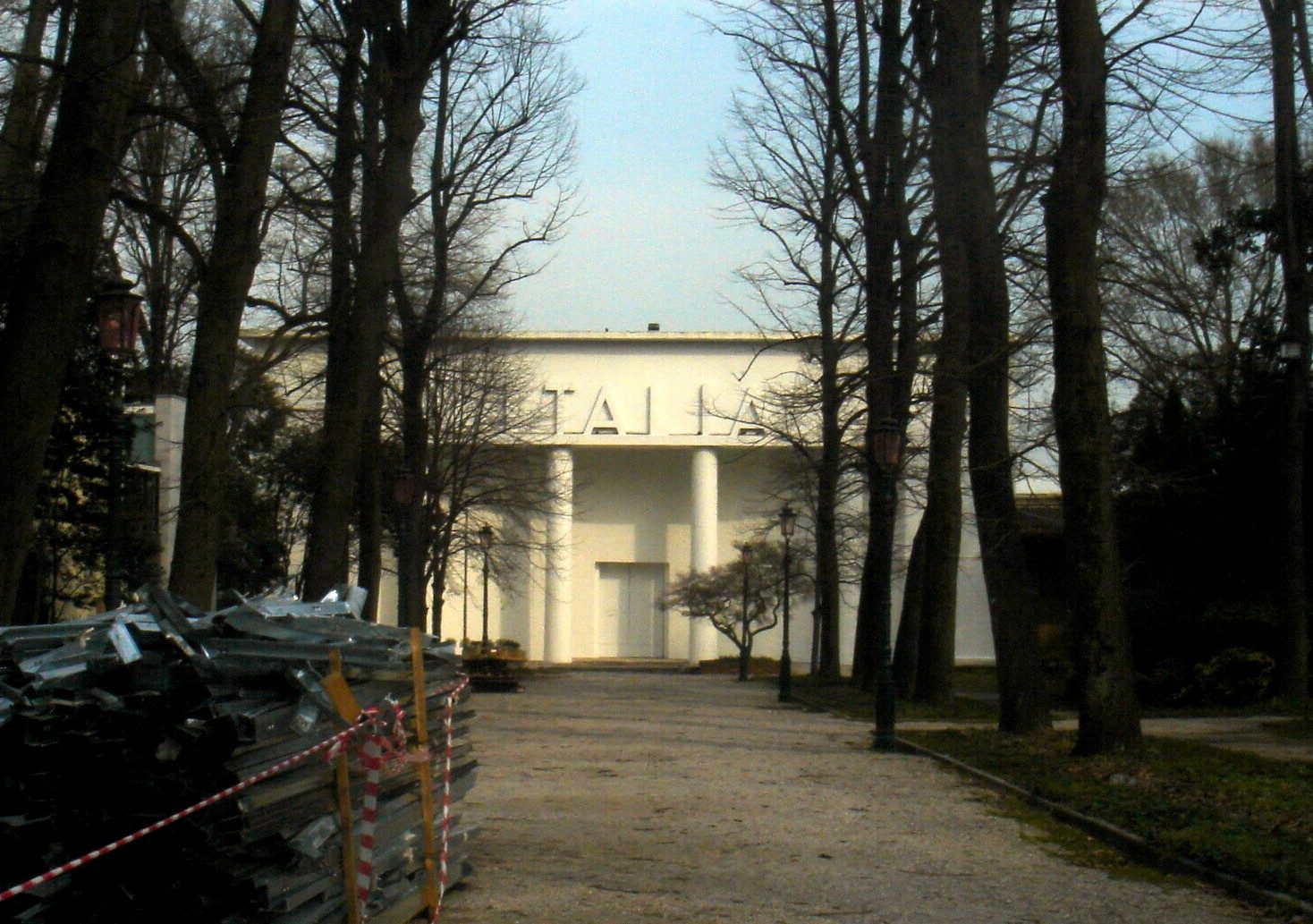
The Russian pavilion was designed by Alexey Shchusev as an architectural sign of imperial presence in an international cultural showcase.
More than a century later, the same principle of national representation has begun to work as a trap. In 1914, the pavilion meant: the country is present in the world of art. In 2026, the pavilion means: the country is present, but so complicatedly that it is better to let only professionals and the press inside, and show everyone else a screen.
The national architecture of the early twentieth century suddenly meets the sanctions bureaucracy of the twenty-first century - and gives birth to the genre of “a pavilion for our own people.”
1968: When Conflict Was Not Hidden Behind Ticket Tracking
The strongest comparison inside Venice’s own history is 1968. That year, student protests disrupted the normal opening of the Biennale and began a period of institutional change that culminated in the new statute of 1973.
After the protests, prizes were not awarded. In the Art Biennale, they returned only in 1986.
In 1968, the conflict was open: the street, slogans, police, criticism of commercialization, the collision between an old institution and a new political culture. It was unpleasant, rough, but honest in its visibility.
In 2026, the conflict has not disappeared. It has changed form. Instead of the street: press releases. Instead of reform: Visitors’ Lions. Instead of cancelling prizes: moving them to November. Instead of a decision: ticket tracking. Instead of public access: insiders.
This does not mean that 1968 was “better.” It means that back then, a crisis could still look like a crisis. Today, it looks like an interface.
South Africa: The Example That Breaks the Myth of Complete Neutrality
The Biennale likes to speak of the principle of openness: if a state is recognized by Italy, it may participate. But the history of the Biennale itself contains political exceptions.
The most important example is South Africa under apartheid. In the 1950s and 1960s, its participation was restricted and contested. After 1968, the country was effectively ostracized and returned to Venice only in 1993, when the apartheid system was already coming to an end.
This example matters not because every conflict should be mechanically compared to every other one. It matters because it shows that an international art institution sometimes does make a political decision.
It does not pretend that “art is outside politics” when the pavilion itself is political architecture. But such a decision requires clarity.
In 2026, clarity was missing from everyone: the Biennale, the jury, politicians and European funding structures.
Documenta: When Political Crisis Breaks the Mechanism of Governance
The comparison with Documenta 16 shows that Venice is not alone. In 2023, the selection committee for Documenta 16 resigned amid mounting pressure following debates around antisemitism, the Hamas attack of October 7 and the polarization of German cultural politics.
Documenta’s official communications spoke of mounting pressure and the need to restructure the process for choosing the artistic director.
But the difference is fundamental. Documenta is a curated exhibition without national pavilions. Its crisis was managerial: who chooses the artistic director, how politically sensitive positions are assessed, where the line lies between censorship and responsibility.
Venice’s crisis literally stands in the Giardini in the form of state-buildings. Here one cannot simply replace a committee. The national pavilions are the old machine of the Biennale itself.
Documenta can restructure a committee. Manifesta can change a city. Venice cannot remove the Giardini from its own history.
That is why its crises always look architectural: the door is closed, the flag is hanging, the list is published, and the public is standing outside.
Why This Is Actually Funny
What is funny is not that closed previews exist. They exist at every major exhibition.
What is funny is that, in this case, the preview becomes almost the only full moment of access to the pavilion. It is funny that a public exhibition, born as an international showcase of art, arrives at the regime of “a screen for the public, inside access for our own.”
It is funny that the jury first introduces a moral filter, then resigns, and the institution, instead of restoring the authority of professional judgment, hands everything over to visitors who do not receive equal access to the controversial object.
It is also funny that this entire construction is presented in the language of inclusion, freedom and equal treatment. In reality, equality looks like this: some see the performance inside, others see documentation outside; some decide not to award prizes, others cancel that decision through a new procedure; some speak about the ICC, others about funding, others about tickets, and still others about dialogue.
And all of this revolves around pavilions that, in principle, should either be shown to everyone or not shown at all.
Otherwise, the very idea of a public exhibition falls apart. Art seen only by “industry insiders” is no longer public culture. It is an internal meeting of the art sector with artistic accompaniment.
Finale: The Peculiarities of the National Insider
The Venice Biennale of 2026 may have wanted to prove that art is stronger than politics. The result was the opposite: politics ended up even in the door handle.
Who enters? Who does not? Who saw it? Who retells it? Who votes? Who had access? Who became an “industry insider,” and which office issued that rank?
The most accurate title for this story is not simply “the scandal around the Russian pavilion” and not simply “the resignation of the jury.” It is the peculiarities of the national insider.
The old pavilion in the Giardini, built as a symbol of a state’s presence, now becomes a symbol of the impossibility of normal presence. The Israeli line adds a second shadow: the closed pavilion of 2024 as a gesture by its authors, and the 2026 participation as part of the dispute over awards and the ICC.
The jury adds a moral explosion. The Biennale adds Visitors’ Lions. The press adds “industry insiders.” And together it all begins to sound like a comic sketch about global culture that cannot decide whether it is open or closed.
To the closed door that became the main exhibit. To ticket tracking as a new form of democracy. To a pavilion that officially participates but practically disappears for the public. To an institution that spent more than a century learning how to show art to the world - and in 2026 suddenly invented the strangest format of all: showing art to those who are already inside.
This is not a cheerful story. But it is genuinely funny. In the most precise, unpleasant and journalistically beautiful sense: when a huge international institution, faced with a real moral problem, does not solve it, but turns it into an access procedure, a list of badges and a screen outside a closed pavilion.
Photo credits and production notes
This edition is a photo-forward magazine layout prepared from the English article text. It keeps the article structure and adds a visual editorial rhythm: cover, dossier, photo spreads, pull quotes and enlarged image captions.
This article was prepared for publication on archcabinet.online.
https://archcabinet.online/